
Acute and chronic distal biceps injuries
The distal biceps tendon connects the biceps muscle to the radius near the elbow. Injury may cause a sudden pop, bruising and weakness, particularly when turning the palm upwards. Tears may be partial or complete.
A suspected acute rupture warrants prompt assessment, even if the initial pain settles. Examination and, when needed, ultrasound or MRI help establish the injury.
In a chronic injury, the tendon may have retracted and scarred. Direct repair can be more difficult; some patients need reconstruction with a tendon graft. Delay does not automatically mean treatment is impossible.
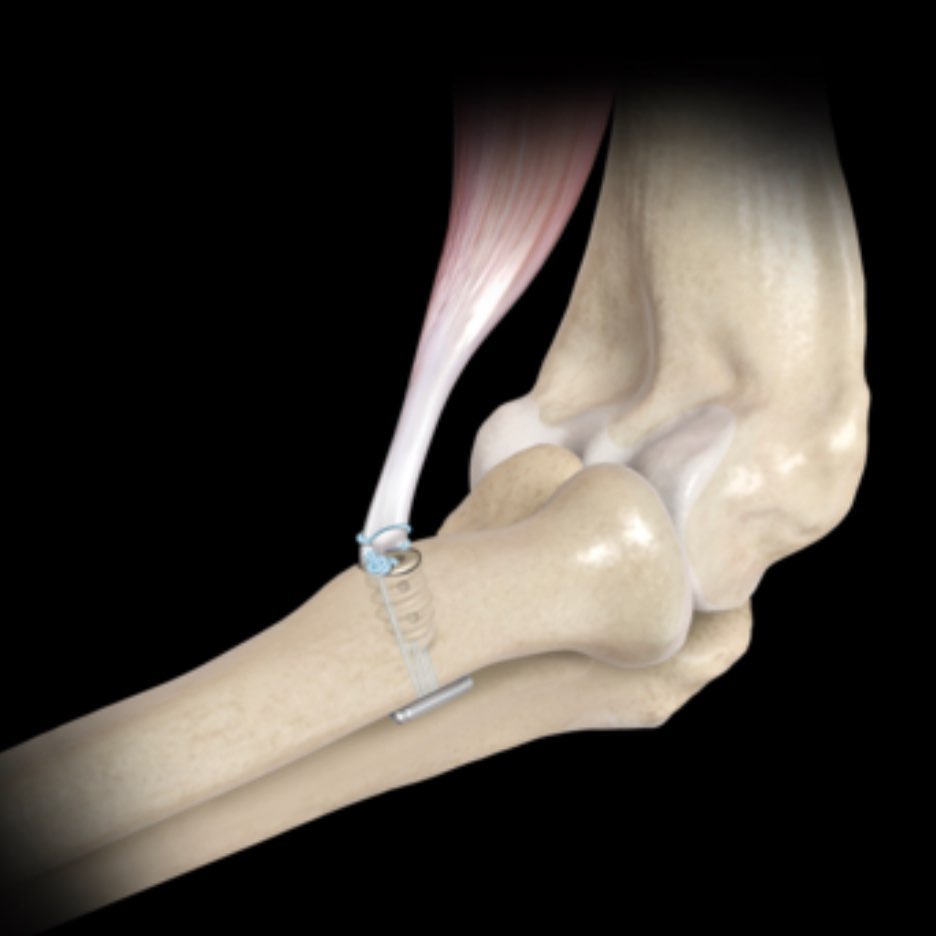
Dr Melsom’s Endobutton technique
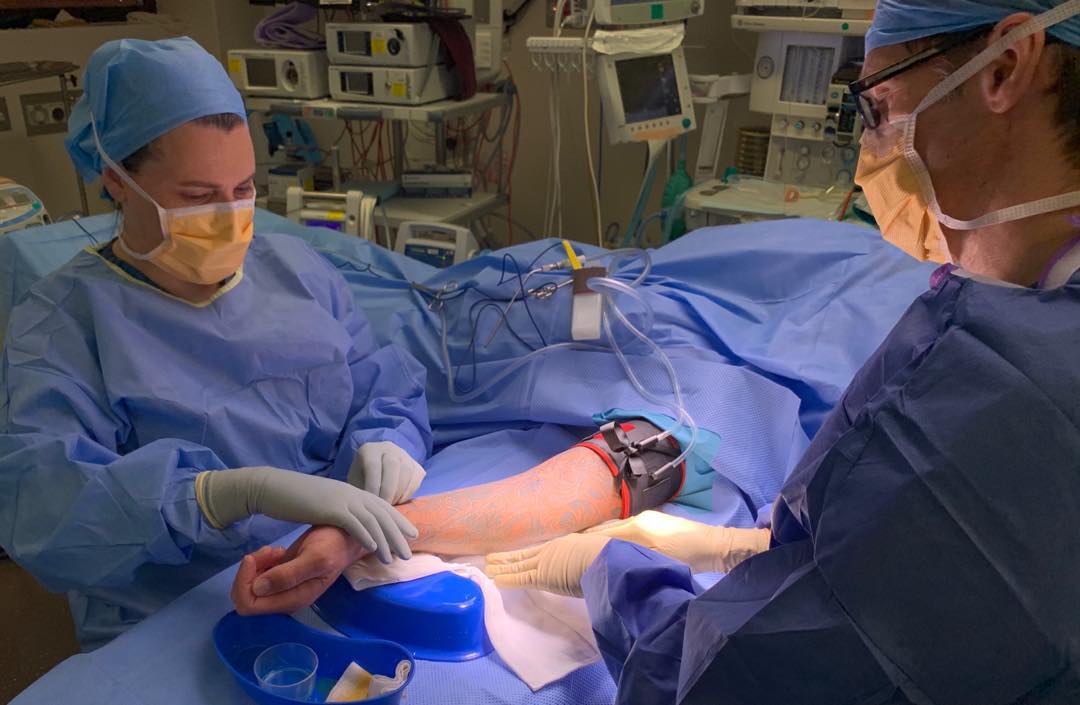
Dr Melsom uses an Endobutton (cortical button) technique for distal biceps repair. This secures the tendon to the radius with sutures attached to a small button that rests against the bone’s outer surface. The operation is usually minimally invasive, using a limited incision where appropriate. The approach depends on the injury; a chronic or complex tear may require a more extensive procedure.
Choosing treatment and recovering
Surgery or non-surgical care is discussed according to your tear, health and functional needs. Protection and rehabilitation are essential after repair; fixation does not mean the tendon is ready for immediate heavy lifting.
Risks include nerve injury, stiffness, abnormal bone formation and repeat rupture. Your individual plan and restrictions are discussed before surgery.
AAOS information on distal biceps tears.
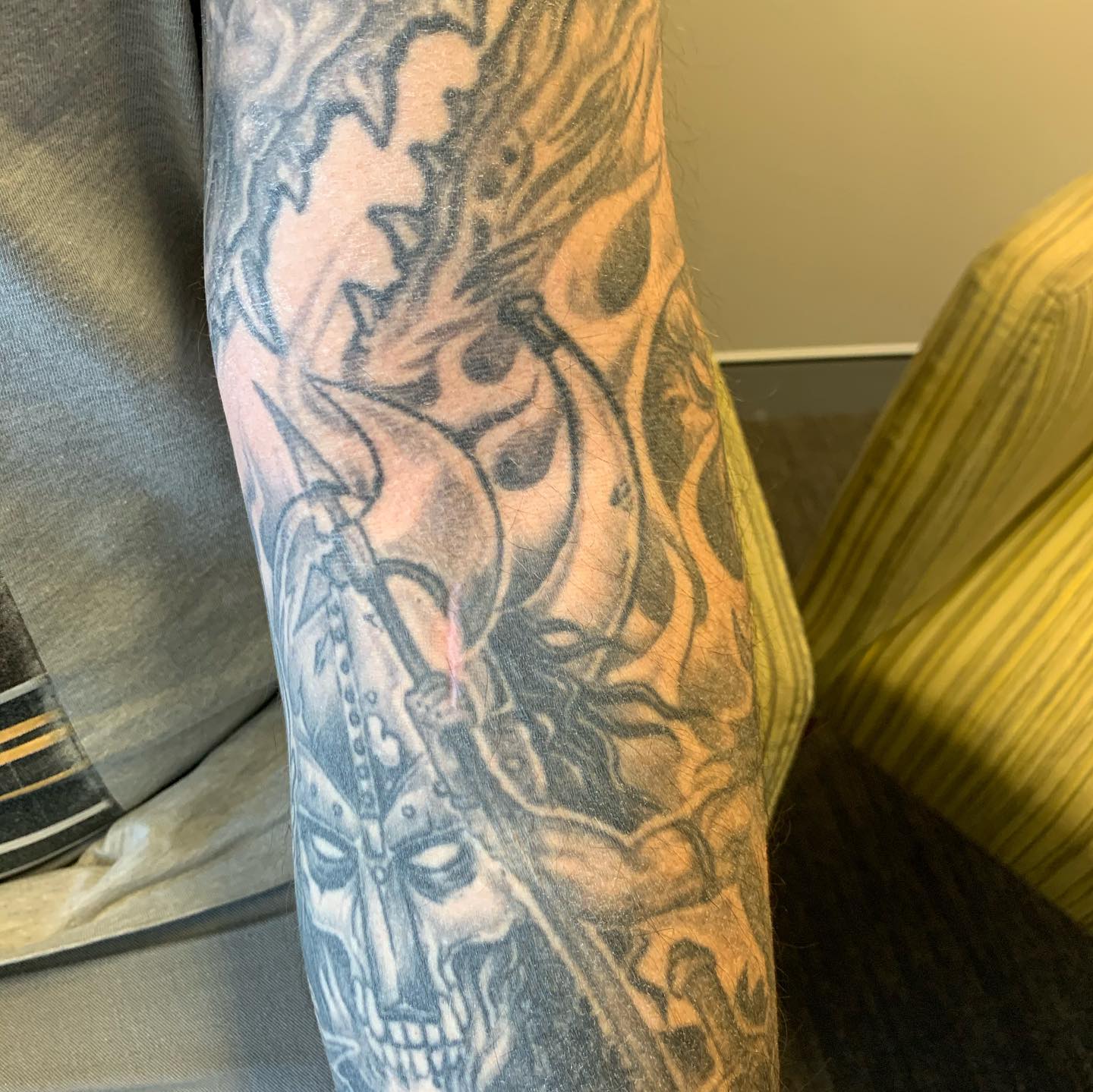
Scar appearance after surgery
Brisbane, Ipswich and Springfield
Dr Melsom provides elbow care for patients across Brisbane, Ipswich and Springfield. Consulting appointments are available at Auchenflower and Ipswich; operating hospitals include Mater Private Hospital, Springfield. See locations or contact the rooms to arrange an assessment.