
Mako robotic-assisted
shoulder surgery
Understanding the technology. Choosing what suits your shoulder.
From a considered plan
to guided preparation.
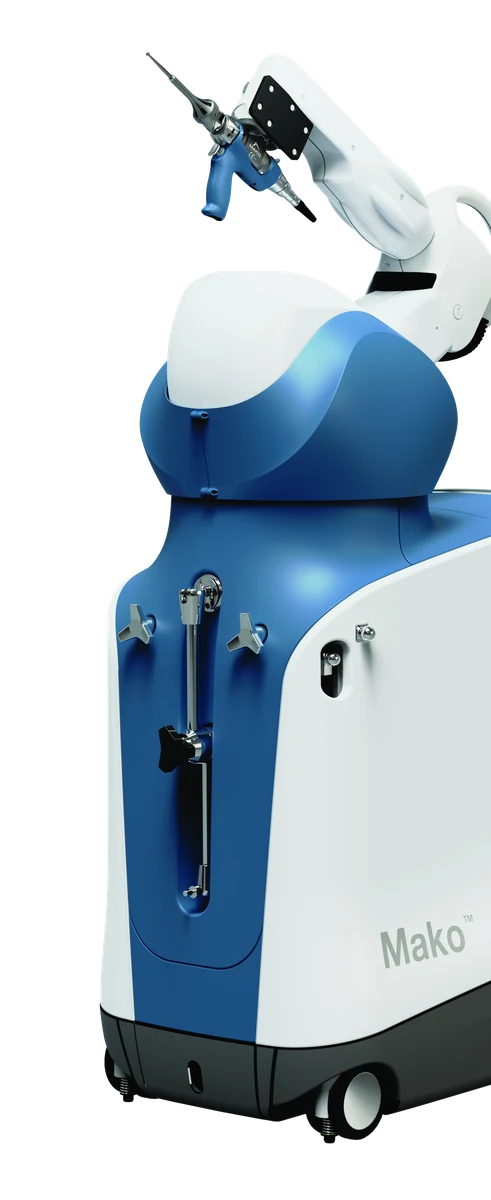
Mako robotic assistance builds on 3D shoulder planning, helping the surgeon carry the plan into the operating theatre.
Planned at the Wesley Hospital following the initial trial. For suitable patients after assessment.
Understand
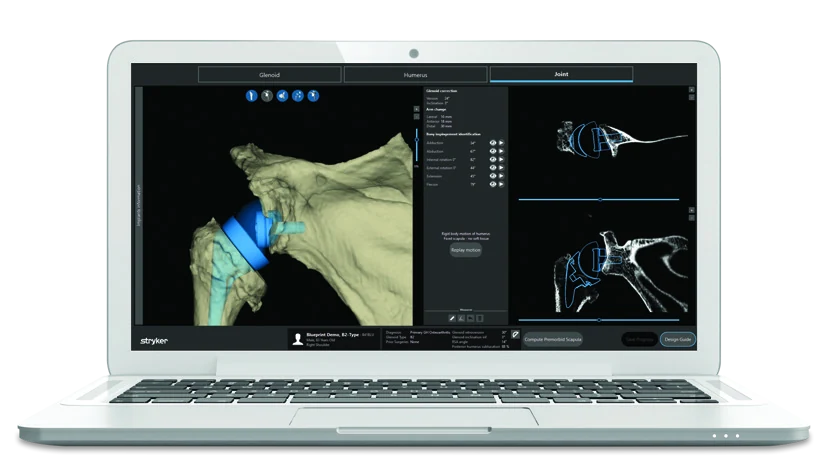
CT-based imaging provides a three-dimensional view of your shoulder.
Plan
Your surgeon considers implant size, position and your individual anatomy.
Guide
The surgeon controls the robotic arm during socket preparation.
What does Mako add to planning and guides?
CT-based 3D planning already helps us choose the size and position of a shoulder implant, and patient-specific guides help transfer that plan to surgery. Mako adds a surgeon-controlled robotic arm with haptic boundaries — a feeling of resistance at the edge of the planned working area — to assist preparation of the shoulder socket (glenoid) in reverse shoulder replacement. Its potential advantage is more consistent execution of the plan, including the direction and depth of bone preparation. Early laboratory and simulation evidence is encouraging, but does not establish better pain relief, faster recovery or longer implant survival than current planning and guides. The surgeon remains in control throughout. Following the initial trial at the Wesley Hospital, Dr Melsom plans to offer Mako-assisted shoulder replacement to suitable patients; availability and individual suitability will be discussed at consultation.
What does the evidence tell us?
A 2025 laboratory study involving six shoulder surgeons and 36 bone models compared manual instruments, patient-specific guides and robotic assistance. The robotic technique reproduced the plan more accurately than guides in four of five measurements. Inclination was not significantly different. This supports a potential advantage in carrying out the plan, but does not establish better patient outcomes. The choice of surgery still depends on your diagnosis, anatomy, rotator cuff and goals.
Which shoulder replacement?
The Mako application discussed here concerns reverse shoulder replacement. It is a way of assisting surgery, rather than a separate type of replacement. You can also read about anatomic replacement and pyrocarbon hemiarthroplasty.
Discussing your options
At consultation, ask whether robotic assistance would add value in your case, what alternatives are available, and how the proposed procedure affects risks, costs and rehabilitation. A robot does not remove the risks of shoulder replacement.
Further reading
- Stryker: Mako Shoulder technology — manufacturer information.
- Stryker: Blueprint planning and patient-specific guides.
- Athwal and colleagues: robotic preparation compared with manual instruments and patient-specific guides — 2025 bone-model study.
- Mako glenoid preparation compared with manual and patient-specific guide techniques — simulation research.
Discuss your shoulder treatment options
A consultation can help establish the diagnosis and whether shoulder replacement is appropriate for you.